
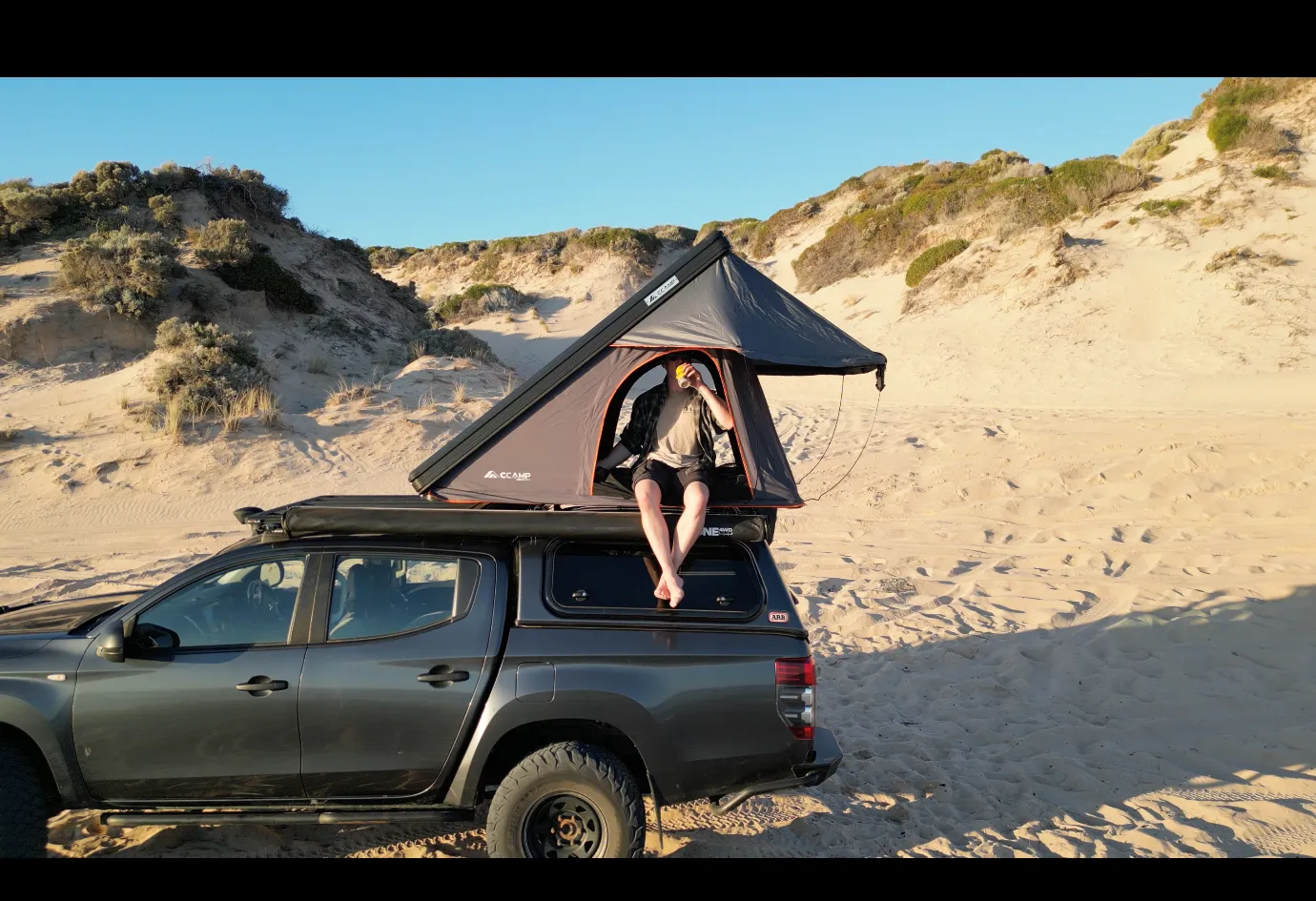
A rooftop tent appeals to people who want less setup hassle at camp. That point matters more than fancy looks, honestly. You park, open the tent, sort your bedding, and you are already much closer to done than ground campers usually are.
Wet soil, stones, and uneven patches become less annoying issues. That does not mean every setup feels perfect right away. Vehicle height, ladder use, and packed weight still affect comfort in practical ways. People notice those things fast.
The side shelter matters more than many buyers expect
A 270 awning usually becomes important after the first trip, not before. People focus on sleeping first, then realize weather protection changes the whole campsite routine. Shade while cooking matters. Dry cover while getting gear organised matters too.
Even a short rain spell can make a setup feel annoying without proper side coverage. The wide wraparound shape is useful because it covers more than one side. That makes movement around the vehicle easier during rough weather or strong afternoon sun.
Check everything carefully before buying anything
Weight needs proper attention because roof load limits are not flexible suggestions. Some vehicles handle extra gear better than others, and that changes what tent size makes sense. Opening style matters too. Soft shell models often cost less, while hard outside units are usually available faster and pack down neater.
With a rooftop tent, you should as a result check the bed thickness carefully. Thin foam sounds manageable online, but then feels much less impressive after a second night. When interrupted sleep outdoors affects you, small comfort problems grow quickly.
Weather use is not only about heavy rain
People talk about rain resistance a lot, but ventilation deserves similar attention. Condensation inside a tent can compel lights to be clingy and oddly cold, even when the weather looks favourable. Mesh panels, airflow design, and fabric quality all play a part there.
A 270 awning also needs decent leg stability and sensible mounting points. Wind can turn a relaxed afternoon setup into a minor headache pretty quickly. Some models include support features that help, but the correct setup still matters every single time.
Do not ignore storage, packing, and everyday driving
People skip this part too often. Once installed, a tent changes clearance, fuel use, and the way some vehicles feel on the road. None of that makes the product bad. It just means buyers should think beyond campsite photos and marketing language.
The same goes for a 270 awning. It adds convenience, yes, though it also adds bulk to the roofline. If daily driving is part of the plan, not just weekend touring, those changes need a realistic look before buying.
Best use cases for this kind of camping gear
A rooftop tent works especially well for short touring stops, road trips, and travellers who move camp often. People who stay five nights in one place sometimes prefer more floor space on the ground. That difference is worth thinking through before spending anything.
Awning systems suit campers who cook outside, carry recovery gear, or spend daytime hours around the vehicle. In that situation, the shelter adds real function instead of just looking impressive in photos.
Conclusion
Choosing camping gear should come down to use, vehicle fit, and daily convenience rather than hype alone. At ccamp.com.au, Buyers can compare options that suit their touring habits, storage space, and weather needs without making the process harder than it needs to be.
The right rooftop tent can make overnight stops much easier. A suitable 270 awning can also improve shade, shelter, and everyday comfort at camp. Both products work best when the setup matches the vehicle and the travel style.
Check your needs carefully, compare the specs, and ask friends for practical advice before deciding what to buy next.
Frequently asked questions
1. Is a rooftop tent more helpful than a bed tent for periodic camping
A rooftop tent can feel easier for someones who move command repeatedly and enjoys a speedier setup. It keeps the sleeping area off wet ground, which helps in rough conditions. It may not suit everyone, though, especially trailers who want better rooms at a lower cost.
2. Can a 270 awning stay open in windy weather?
A properly set up 270 awning can handle light wind, but stronger wind requires extra care. Support legs, guy ropes, and correct mounting all matter here. Leaving it open without proper support in bad weather can cause problems pretty quickly.
3. Can a rooftop tent be installed on any car
Not every conveyance can incorporate a rooftop tent safely. Check roof load limits, rack systems, and vehicle size first. Some smaller vehicles may not suit heavier tent models, so matching the product to the vehicle is a basic step.
4. Are 270 awnings worth it for short trips?
A 270 awning can still be worth it on brief trips if you want quick shade and weather covering near the vehicle. It helps with cooking, gear sorting, and sitting outside more comfortably. For many campers, that extra shelter becomes useful almost every time.
5. Do rooftop tents and awnings need much maintenance?
The two products require a little routine maintenance to be able to last long. When possible, dry the fabric and check the hardware later for wear. A rooftop tent and top gear tend to be in better condition when washed and packed well.