
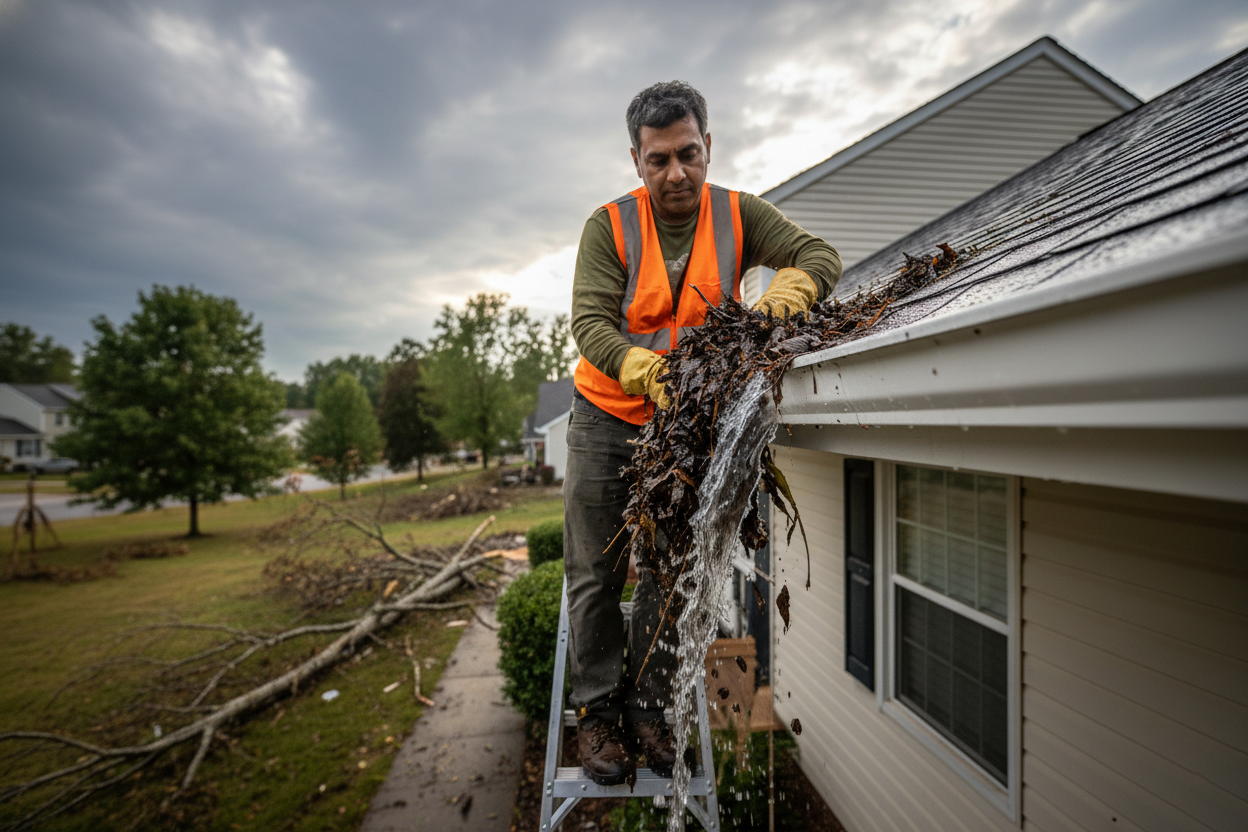
We have all been there, right? Brew in hand, watching a huge windstorm pass by, just hoping the roof would survive.
Gutters are meant to be the silent heroes of the house, quietly carrying water away from your house’s foundation. But when nature’s ever-changing climate affects gutters, throwing a spanner in the works, stuffing the gutters with soggy leaves, snapped off branches, and a myriad of sludge, that shield of protection goes straight out the window.
When water finds a blockage, it climbs. Clogged gutters mean overflow, creeping into ceilings, softening wood edges, and slipping under walls. Damage like that can add up to big bills later. Wait for clear skies, then sort what piled up.
Step 1: Size Up the Situation (Safely)
Wait, just a minute. The rain has cleared up, and your tendency is to grasp the ladder? Don’t do it. The whole lot is ridiculously slippery, and if you scrabble up straight away, you’re only going to end up in casualty. Keep your feet on firm ground.
Instead, pick up a pair of binoculars first. Along the roofline, scan slowly with your gaze – look for dips or splits showing through. Where branches hang heavy overhead, pay close attention there. A drooping section might hint at deeper issues beneath.
Later on, snapped photos help show exactly how bad things looked. A few shots at different times make it easier to prove the mess left behind. Line them up well, insurance talks get smoother than expected. Suddenly, explaining feels natural instead of confusing.
Step 2: Spot the Danger Signs
Figuring out whether there’s major structural harm comes first. Scooping sludge waits till later.
Start by nudging the downpipes within arm’s reach – see if they shift. Loose brackets might show up right away. When gutters look like they’re sagging from the fascia, take note. That kind of separation? A serious warning sign, honestly.
Keep your eyes peeled for dirty overflow marks down your home’s siding, which basically scream that water has been spilling straight over the edge. Check the soil near your foundation for pooling water. Oh, and duck inside for a quick look at your ceilings. Ugly brown or yellow stains mean the water has already breached the perimeter.
Step 3: Get Your Gear Together
Thinking of going the DIY way? Why not. However, you would require the attachment and its accessories. A durable, self-foots ladder is a must. Grabbing wet debris with your hand is a guaranteed way to cut your fingers on rusted metal or welcome bacteria.
Thick rubber or suede work gloves are a “must”. Safety glasses are also a good idea to keep flying grit away from your eyeballs. To do the actual dirty work, a plastic gutter scoop does a perfect job.
It helps take out the water while allowing you to grab the solid waste.
Step 4: The Clean-Up Process
Start at one end. Work your way across.
First, pull out the bulky branches and those massive, heavy clumps of wet leaves. Once the big stuff is out of the picture, it’s hose time. Start at the opposite end of the downpipe and flush the entire system out to check the water flow.
Stuck water flow? There’s likely gunk stuck in the downpipe. Pushing a hose inside can force the jam loose from below. When that fails completely, it’s time for hands-on work.
Step 5: Knowing When to Call the Pros
DIY isn’t for everyone. There is no shame in that whatsoever.
Ladder falls are no joke and are a leading cause of home injuries. If your place is more than two storeys high, or if the storm completely ripped sections of your guttering clean off, hand the reins over to the professionals.
Whether you’re hunting for reliable roof gutter cleaning in Melbourne or need urgent repairs out in the suburbs, getting an expert on the job means it gets done safely. Honestly, ringing up Gutter Cleaning Experts in Melbourne is sometimes the smartest move to protect your property from hidden leaks or structural nightmares.
Step 6: Future-Proofing Your Home
Next time storms roll in, staying ahead could save you trouble. Be ready before they hit.
Twice yearly, give your gutters a proper clean. Gutter guards? Worth considering – they catch larger debris without slowing down water flow. Come autumn or spring, set aside hours to cut back nearby tree limbs. Fewer leaves mean fewer headaches later. Prevent clogs by acting early.
Conclusion:
Heavy rain means time is already moving. Get started fast – ideally in one or two days. Why? Because it stops the wet sludge from settling and breaking your gutters under the sheer weight. A bit of elbow grease today will literally save you thousands of dollars in water damage down the track.